The Industrial Bread Disconnect
In supermarket aisles, commercial sliced loaves arrive packaged in plastic, engineered for endless shelf-life through chemical dough conditioners, synthetic preservatives, and fast-acting commercial baker yeast strains. These industrial loaves can be mixed, fermented, proofed, baked, and packaged in less than ninety minutes under the Chorleywood Bread Process. The result is a uniformly soft loaf with virtually no complex flavour, high glycaemic response, and a fragile nutritional footprint.
When we begin maintaining our own wild sourdough starter—a living colony of wild yeasts such as Candida humilis and lactic acid bacteria including Fructilactobacillus sanfranciscensis—we step into a radically different timeline. We no longer dictate when bread happens; the ambient kitchen temperature, flour enzymes, and microbial colony dictate the pace. A good loaf requires twenty-four to thirty-six hours of unhurried fermentation.
The Mechanics of Hydration and Gluten Strength
In our baking practices, water ratio (hydration expressed as a percentage of total flour weight) determines crumb openness and loaf geometry. High hydration doughs demand careful gluten alignment through gentle coil folds rather than aggressive machine kneading:
| Hydration Band | Dough Handling Character | Internal Crumb Density | Optimal Baking Container |
|---|---|---|---|
| 65% – 70% | Stable, holds shape easily | Uniform, fine-grained crumb | Standard loaf tin or baking sheet |
| 72% – 78% | Supple, requires bench scraper | Moderately open artisan alveoli | Heavy cast-iron combo cooker |
| 80% – 85% | Wet, slack, requires tension folds | Very open, custard-like crumb structure | Pre-heated lidded ceramic cloche |
The Fermentation Cycle: Autolyse to Retardation
We break the sourdough process into deliberate stages, each serving a biochemical purpose:
- Autolyse: Mixing flour and water without salt or starter for thirty to sixty minutes. Endogenous amylase enzymes break starches into simple sugars while protease softens proteins, jumpstarting gluten development without oxidation.
- Inoculation and Bulk Fermentation: Integrating ripe levain and unrefined salt. We perform stretch-and-fold cycles every thirty minutes for the first two hours to build structural tensile strength.
- Preshape and Bench Rest: Rounding the fermented mass gently on an un-floured timber bench, allowing the surface gluten sheath to relax for twenty minutes.
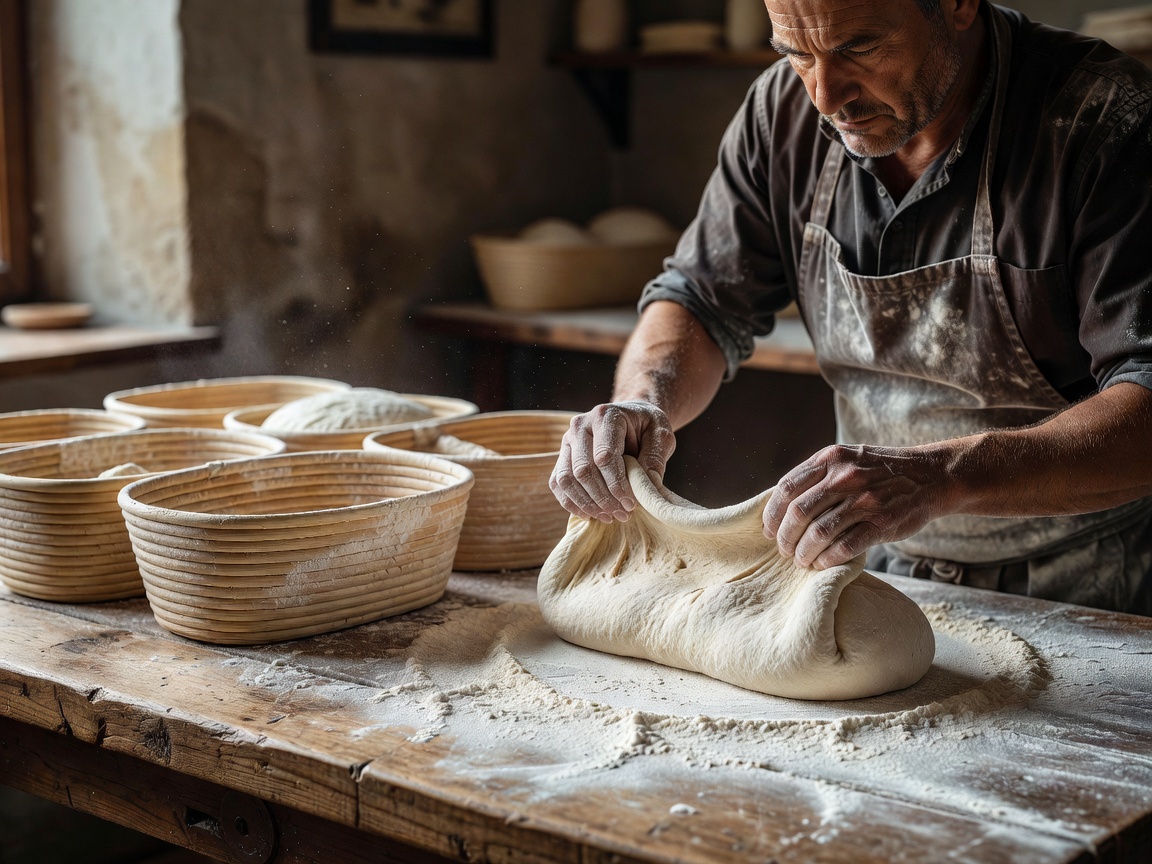
- Final Shaping and Banneton Proof: Folding the dough envelope into a taut batard or boule and tucking it into a dusted cane banneton basket.
- Cold Retardation: Chilling the shaped loaf at 4°C for twelve to eighteen hours. Low temperatures halt yeast gas production while lactic bacteria continue producing acetic and lactic acids, building complex sour tones and stiffening dough for scoring.
The Physics of Oven Spring and Crust Blistering
When we tip our cold dough onto a parchment cradle, we score the skin with a razor-sharp lame blade held at a thirty-degree angle. This deliberate incision guides the internal steam release. Without that score, the expanding gas ruptures haphazardly through the base.
Dropping the scored loaf into a screaming-hot, preheated cast iron Dutch oven creates a micro-steam chamber. Steam keeps the outer gelatinized starch layer moist and extensible during the initial ten minutes of baking, permitting the loaf to achieve dramatic volume before the crust sets. When we finally remove the lid, intense dry heat caramelizes maltose sugars into deep mahogany tones, dappled with crisp micro-blisters. Cutting into a cooled loaf the next morning offers a visceral sensory reward that no factory product can match.