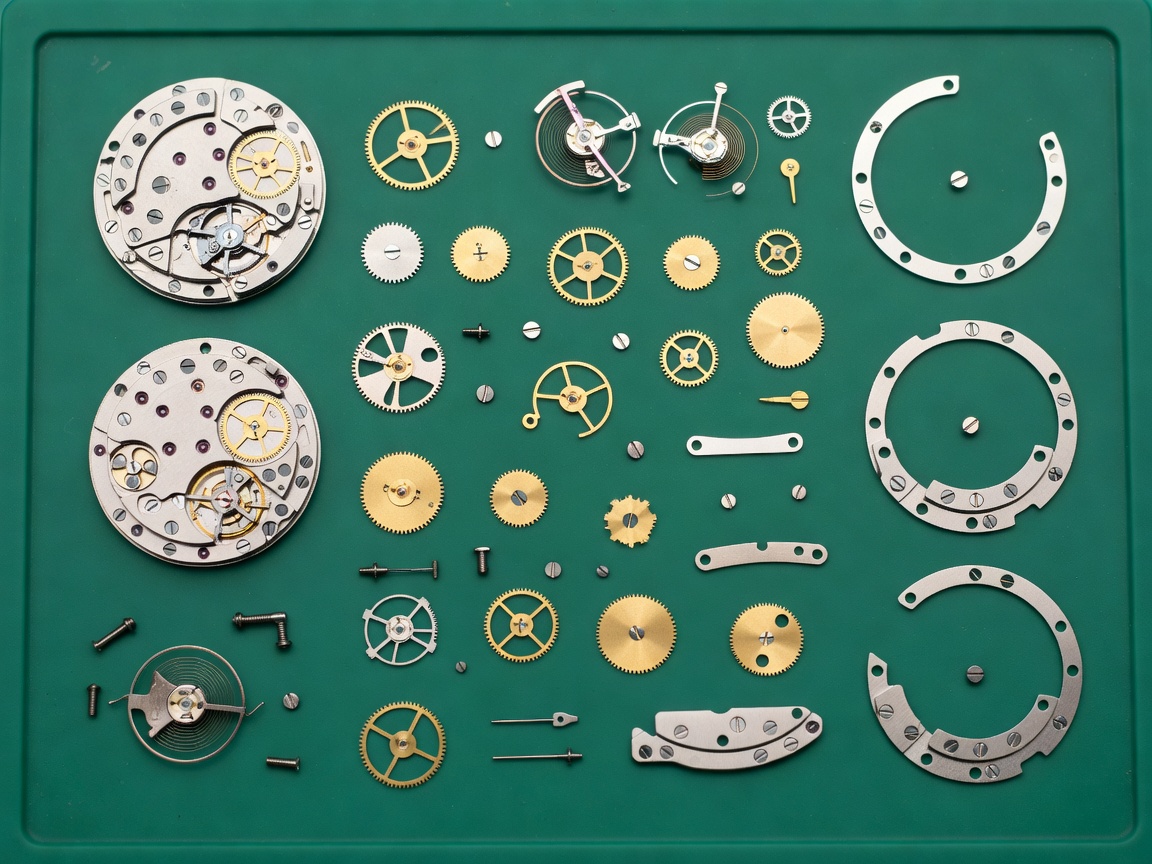
The Allure of the Autonomous Engine
In our connected landscape, almost every device we own depends on rechargeable lithium batteries and continuous wireless synchronization. Our smart wristbands buzz constantly, prompting us to read messages, calculate heartbeats, and check calendar invitations. They are remarkable tools, yet they possess zero permanence; within five years, battery degradation and firmware abandonment render them obsolete scrap.
A mechanical watch movement, however, is a miniature kinetic engine powered entirely by wound spring steel. When we wind the crown, we store elastic potential energy inside a coiled mainspring. That power releases through a series of interlocking pinion wheels, metered out fraction by fraction through a Swiss lever escapement. In an age of ephemeral disposable electronics, learning how to disassemble, clean, lubricate, and regulate these tiny mechanical assemblies has become an intoxicating slow pursuit.
The Essential Organs of a Mechanical Calibre
When we sit down at our workbench with brass tweezers and a 4x magnification loupe, we must master the five primary mechanical subsystems that constitute a wristwatch calibre:
- The Mainspring Barrel: The power reservoir. A coiled spring of specialised carbon or cobalt alloy delivers rotational torque as it uncoils.
- The Going Train: Centre wheel, third wheel, and fourth wheel. This gear train multiplies rotational speed while proportionally stepping down mainspring torque.
- The Swiss Lever Escapement: The escape wheel and jewelled pallet fork translate continuous rotational energy into alternating impulses.
- The Balance Assembly: Balance wheel and hairspring. Beating typically at 18,000, 21,600, or 28,800 vibrations per hour, this oscillating mass sets the base cadence of the movement.
- The Motion Work and Keyless Work: The winding stem, clutch, and cannon pinion that permit setting hands and tensioning the mainspring.
Lubrication Protocols: Viscosity and Surface Tension
A frequent error among novice horology enthusiasts is flooding delicate jewel pivots with household oil. In watchmaking, surface tension and microscopic oil droplets are critical. We use specialised synthetic lubricants such as Moebius 9010 for high-speed balance jewels and Moebius HP-1300 for heavy torque barrel pivots:
| Lubricant Grade | Viscosity Profile | Target Movement Location |
|---|---|---|
| Moebius 9010 | Low viscosity synthetic oil | Balance cap jewels, escape wheel pivots |
| Moebius HP-1300 | High viscosity synthetic oil | Centre wheel, third wheel, barrel arbours |
| Moebius 9415 | Thixotropic synthetic grease | Pallet stone impulse faces |
| Molykote DX | Heavy sliding paste | Keyless winding sliding pinion and yoke |
Regulation, Beat Error, and the Timegrapher
Once reassembled, a movement sits on an acoustic timegrapher. The microphone detects the tiny audible clicks of the pallet jewels locking, unlocking, and impulsing against the escape teeth. Two key metrics dictate regulation: rate deviation (seconds gained or lost per twenty-four hours) and beat error (the timing asymmetry between the clockwise and counter-clockwise half-swings of the balance wheel).
Correcting beat error requires nudging the mobile stud carrier with an ultrafine brass probe. A breath of excess pressure risks bending the delicate balance hairspring, an accident that ruins weeks of work in an instant. This demand for steady breathing, steady fingertips, and sustained stillness creates an almost meditative quietness. We leave the bench having accomplished something entirely physical, measured in millionths of a metre and tiny fractions of a second.